
Artist statement
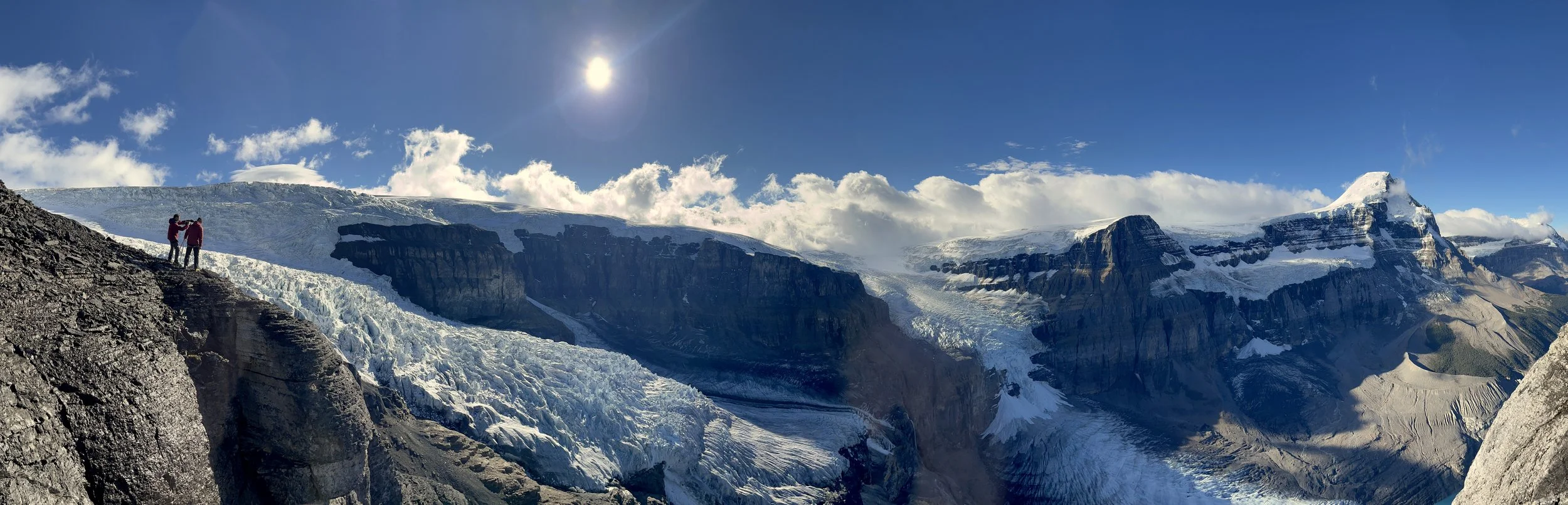
For MELTDOWN, we aimed to capture the ethereal beauty and timeless grace of the alpine landscapes of one of the world’s most threatened glacial systems—the Columbia Icefield in the Canadian Rockies. The Icefield is part of Canadian identity, and it remains so remote and little known to most of us that it doesn't hold a prominent place in our consciousness.
Our goal was to capture the beauty and majesty of the landscape while also highlighting the rapid retreat of the glaciers, to emphasize the significance of this unfamiliar terrain and help people develop a deeper understanding of what is at stake.
The photographs not only showcase a changing landscape but also act as a stark reminder of the environment's fragility amid climate change. We aim to encourage a deeper dialogue about the Icefield, prompting viewers to reflect on their connection with the natural world and recognize the wide-reaching impacts of human activity on our planet.
MELTDOWN is a call to action.
“We are giving this glorious landscape a voice – the ice and its guardian mountains stand mute; they cannot speak for themselves.”
Meet the Artists
-

Jim Elzinga
Jim has been an active alpinist for over 40 years. He has led multiple expeditions in North America, the Himalaya and the Andes. In 1986, he led the most successful Canadian expedition to Everest (Everest Light). He received a rare Award of Recognition from the Sir Edmund Hillary Foundation recognizing his leadership of this historic expedition.
“No matter how far I have travelled, I have year after year been drawn back to one place: the Columbia Icefield. It is a touchstone in my life; a place in the world and in my heart to which I have been returning for 50 years! It is only now- after a lifetime in the mountains - that I have come to more fully realize the extent to which my experiences in this remarkable place have inspired not just direction, but purpose in my life. I encounter the mountain as both my mentor and my photographic subject.”
Jim’s interest in photography led him, in the early 80s to enroll in the four-year Photo Arts program at Toronto Metropolitan University (formerly Ryerson University). As a documentary photographer, Jim was one of the first western photographers into China to document the lives of ordinary people. In the Icefield, each engagement is an effort to make the invisible visible: “I work to photograph mountain landscapes in an authentic intimate way so viewers are catalyzed to act, moving in their own way toward fuller engagement with the natural world.“
-

Roger Vernon
For five decades, Roger has applied his skills throughout the genres of motion picture photography. Fictional films, documentaries, educational films and TV commercials are all part of his visual language. He is the recipient of multiple awards in these fields. Two of the feature films in his resumé received Academy Awards.
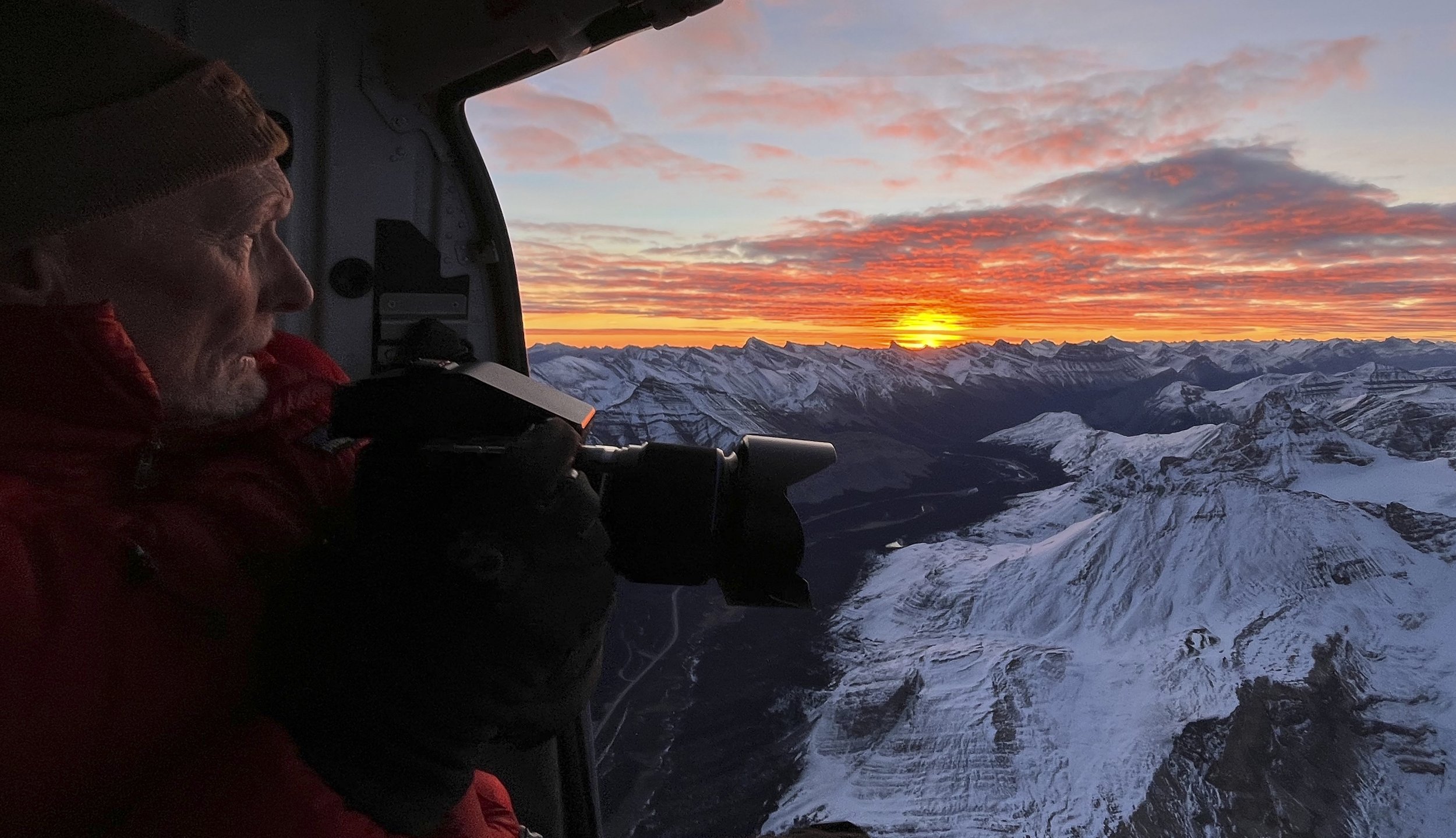
“As I reflect on 50 years working behind the lens I continue to wrestle with translating the profound impact mountains and glaciers have had on my view of the natural world and my place in it. With this project, we are exploring a domain typically reserved for a highly select group of individuals, usually pilots or rescue personnel in service of earth-bound adventurers. This unique perspective, largely undocumented, truly illuminates the current state of glacier reduction and changes to the mountain landscape.”
While he has traveled and worked in many remote corners of the earth including Tibet, Mongolia, Kashmir, Bhutan, the Karakoram to name a few, Roger says that nowhere inspires him quite like the Canadian Rockies, which is why he continues to return to his mountain home in the Bow Valley.
We are blessed with an extraordinary synergy as co-creators. We each bring upwards of 50 years of experience in the Rocky Mountains, and in particular in the Columbia Icefield.
This accumulated experience means neither of us is a mere visitor. We have each internalized an enormous body of sensory, cognitive and intuitive knowledge that informs everything we see and do on these shoots.
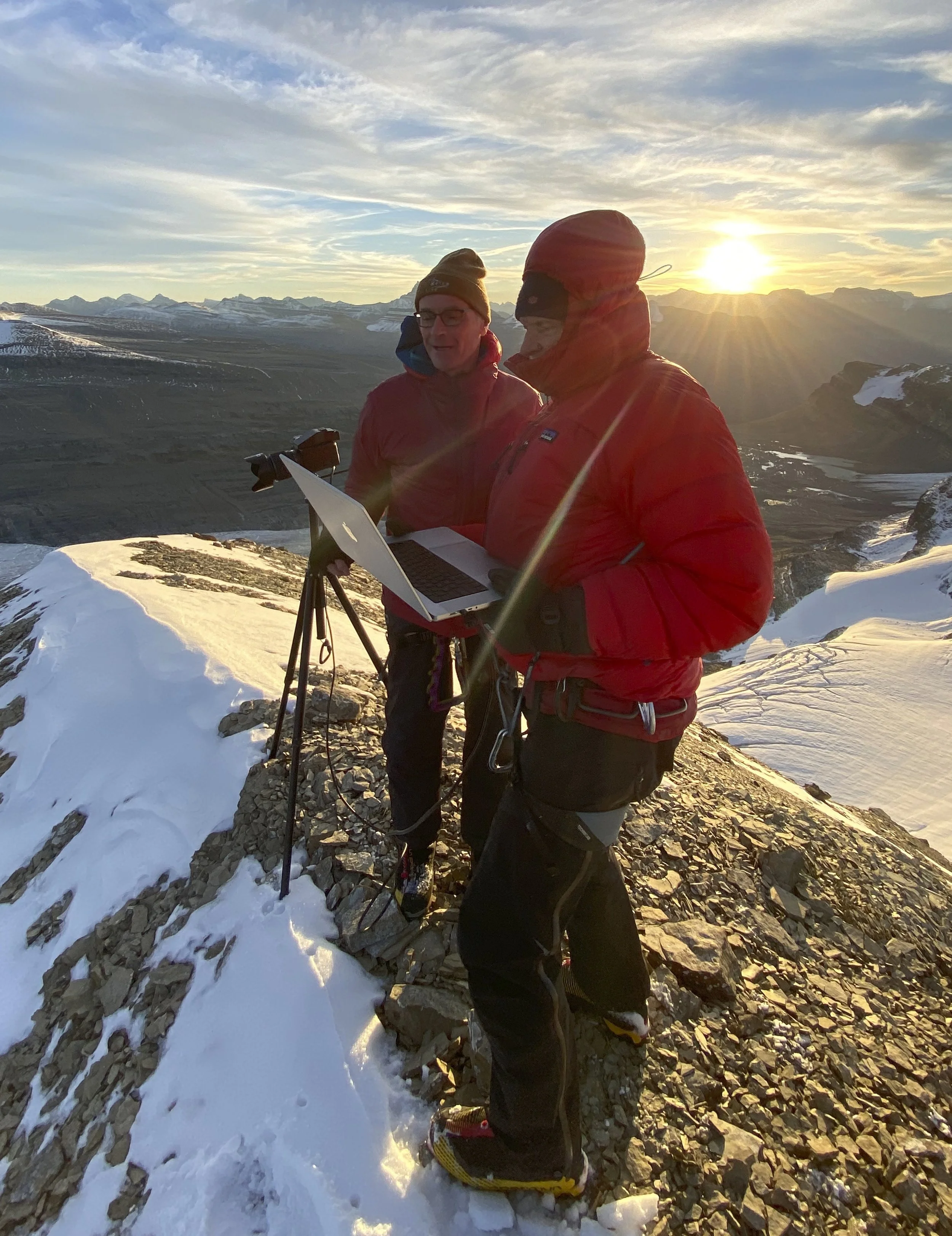
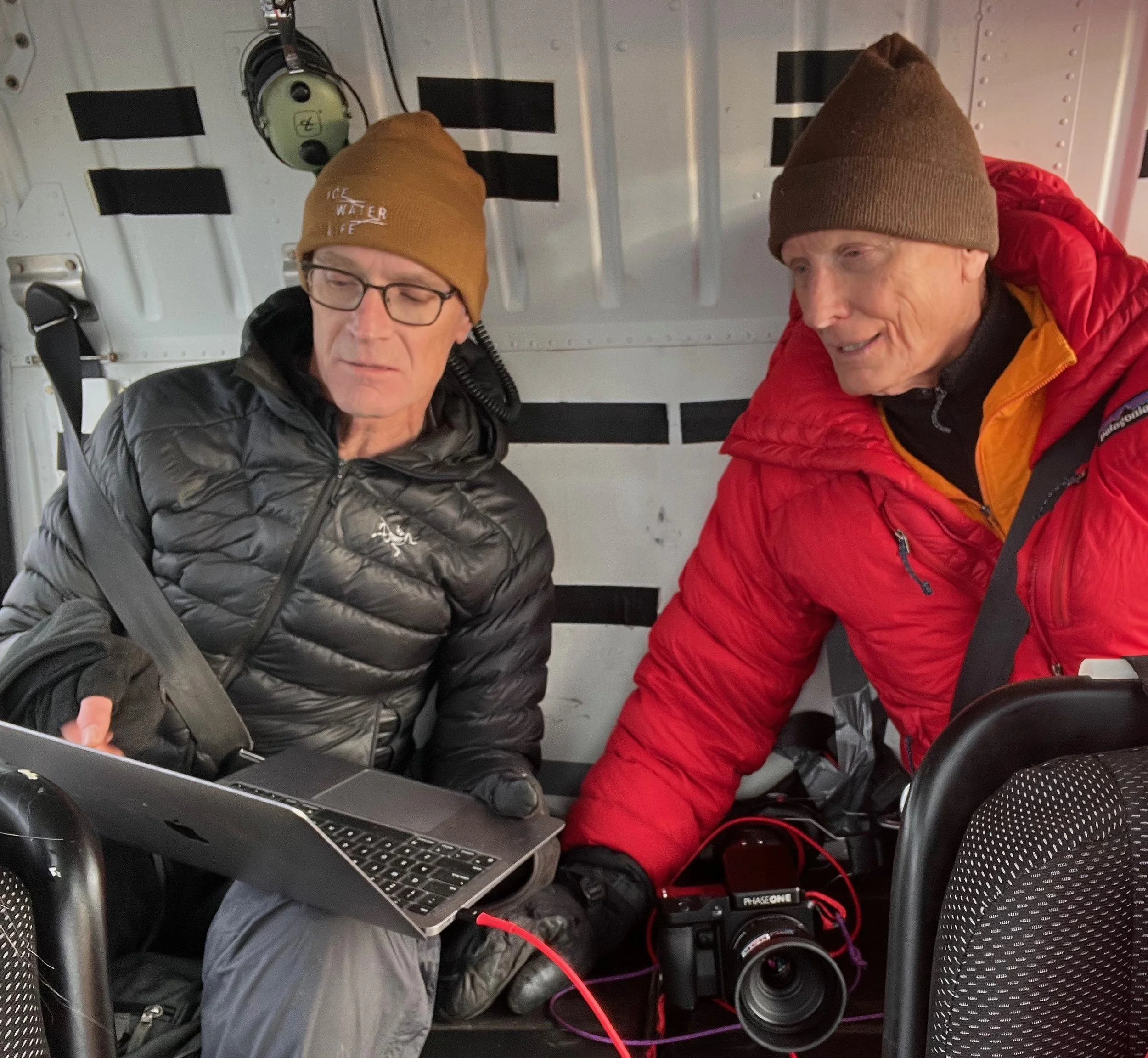
Jim’s decades of climbing, pioneering new routes, have demanded a very particular kind of attentiveness that he describes as “listening to the mountain”. His pioneering ascents are not assaults, he takes the time to connect with the mountain, its moods and tempers. There were times when he decided not to attempt the climb, not merely because of some observable threat, but just from an intuition that the mountain wasn’t receptive to him that day.
Roger has gone to the mountains all his life, to find solace and inspiration. As a busy professional in an intensely technical visual field, time in the mountains has been an opportunity to commune with all that he sees and feels without the demands of commercial film production. He can open his eyes to the formation of clouds in the rising air, the play of light and shadow on the faces of rock and ice, thereby opening his heart to a deeper sense of belonging.
For both of us, it is a place of spiritual meaning that runs deep.